View sample
Buy hard copy / 20,00 EUR
Buy e-book / 16,00 EUR
Borrow e-book / 13,00 EUR

The Afterlife of Data
- What Happens to Your Information When You Die and Why You Should Care
- Carl Öhman
Book is added to the cart - finish purchase.
Today, much of our lives unfolds online—but what happens to our lives after death? Thanks to the digital traces we leave behind, our identities can now be reconstructed after we die. In fact, AI technology already allows us to “interact” with the deceased. Before long, there will be more dead people on Facebook than living ones. In this thought-provoking book, Carl Öhman explores the increasingly urgent question of what should be done with all this data and whether our digital lives truly remain ours after death—and if not, who should have the right to decide their fate.
The stakes could hardly be higher. In the next thirty years alone, around two billion people will die. Those who remain will inherit the digital remnants of an entire generation—the first digital citizens. Whoever ultimately controls these archives will effectively govern future access to our collective digital past, and that power carries profound political implications. The fate of our digital remnants should concern everyone—in the past, the present, and the future. Addressing these challenges, Öhman explains, will require a collective rethinking of our economic and technological systems to reflect more than just the monetary value of digital remains.
As we face a period of profound civilizational change, The Afterlife of Data will serve as an essential guide to understanding why and how we, as a human species, must take control of our collective digital past—before it is too late.
* * *
In sum, if we leave the management of our collective digital past solely in the hands of the industry, the question “What should we do with the data of the dead?” becomes solely a matter of “What parts of the past can we make money on?” We replace the open discussion on what principles should guide the selec
tion of resources passed down to future generations with a system that can only appreciate one value: capital.
The stakes involved in the fate of our digital remains could hardly be higher. Humanity is at the risk of losing access to its collective past and ending up in what archivists call a “digital dark age.” Or worse, we may end up with a hugely asymmet-rical distribution of power over the data that remain. Even if you do not plan on dying anytime soon, and even if you may not personally care about what anyone does to your data after your death, the future of the past is, or should be, the concern of everyone.
* * *
Just like being a good heir, the imperative to be good an cestors is also a collective one. We need to think of ourselves not only as isolated individuals, whose data will be passed down to our next of kin, but also as nodes in the network of history, as citizens whose data will be stewarded by those who come after us. The data trails you leave behind on the web will be an ever so tiny, but ever so important piece of the raw material out of which future generations will construct their narratives about their past. Everything we leave behind as a generation, that is, is a message for posterity saying “This happened. We think it is important that you know about it.” The choice of what “this” should entail should be made consciously, at least on a structural level.
Excerpts from the book
- ISBN: 978-953-369-068-1
- Dimensions: 142x205 mm
- Number of pages: 172
- Cover: paperback
- Year of the edition: 2025
- Original title: The Afterlife of Data. What Happens to Your Information When You Die and Why You Should Care
- Original language: English
- Translation: Marko Maras
Related titles
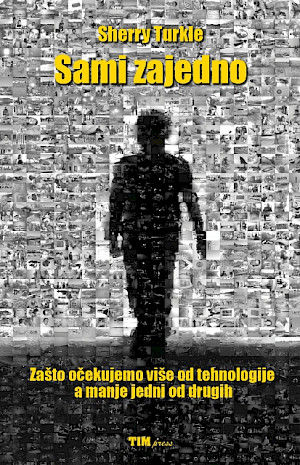
Alone together
Sami zajedno - zašto očekujemo više od tehnologije a manje jedni od drugih, autorice Sherry Turkle, je vrlo brižljivo i stručno, ali svakome razumljivo napisano djelo koje predstavlja zapravo impl...

On Stupidity, Idiocy and Stupid Idiots
Are we about to enter a golden age of stupidity? And will artificial intelligence make us think less? None of us are immune to stupidity and idiocy, but help is available. Lars Fr. H. Svendsen is ...